
AI in Hospitality: Hype or Reality?
Where AI is already saving hotels real time, what it still can't handle, and how hotels, guesthouses, and apartments can use it without complex implementation.
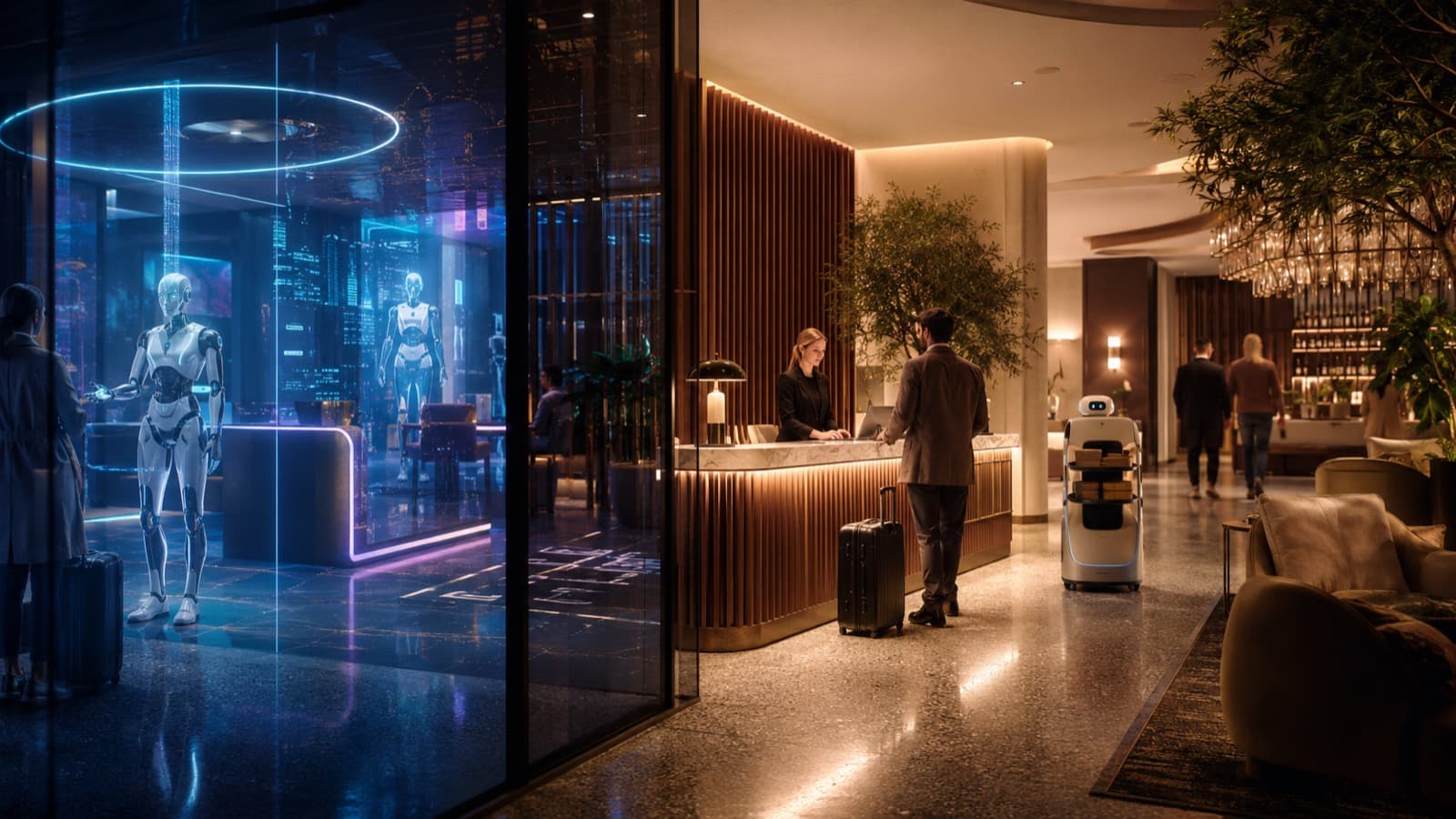
AI in hospitality is no longer just hype. But its real value today doesn't lie in humanoid robots or hotels that run without people. The greatest benefits come from answering repetitive questions, translating, recommending services, and making information accessible to guests.
Artificial intelligence isn't replacing front desk staff or accommodation owners. It's primarily eliminating the routine tasks that eat up their time.
And that's the difference between a technological attraction and a tool that genuinely makes sense in hotel operations.
What Does AI in Hospitality Mean?
AI in hospitality refers to technologies that can work with information, communicate with guests, recommend relevant services, analyze data, or automate parts of operational tasks.
In practice, this might include:
- a chatbot answering guest inquiries
- a digital concierge accessible via QR code
- automatic translation of communication
- recommending restaurants and activities
- personalized offers
- analysis of reviews and feedback
- tools for pricing or demand forecasting
- automation of parts of reservations and operational administration
According to research by Oracle Hospitality and Skift on the future of hospitality, based on responses from over 600 hoteliers and 5,000 consumers, automation, personalization, and self-service technologies are among the key directions for the industry's development.
That said, not all hotel processes can or should be automated.
Where Does the AI Hype Come From?
The hype begins when AI is presented as a flawless replacement for human staff.
In technology presentations, we often see hotels where a robot greets the guest, takes their luggage, handles check-in, prepares the room, and independently resolves every request.
Individual parts of such a scenario are already technically possible. The problem arises when deploying them in real-world operations.
Hotel operations are full of exceptions:
- a guest arrives later than originally planned
- the reservation is under a different name
- the key lockbox won't open
- they need to change rooms
- they have an allergy or specific requirement
- they don't understand the instructions
- they want to file a complaint
- a problem occurs that nobody described in the system
AI works based on available information and the probable meaning of a query. If information is incomplete, outdated, or ambiguous, it may respond inaccurately.
The bigger the decision we entrust to it, the more serious the mistake can be.
AI is therefore best suited as a first layer of help. Not as the final authority for every situation.
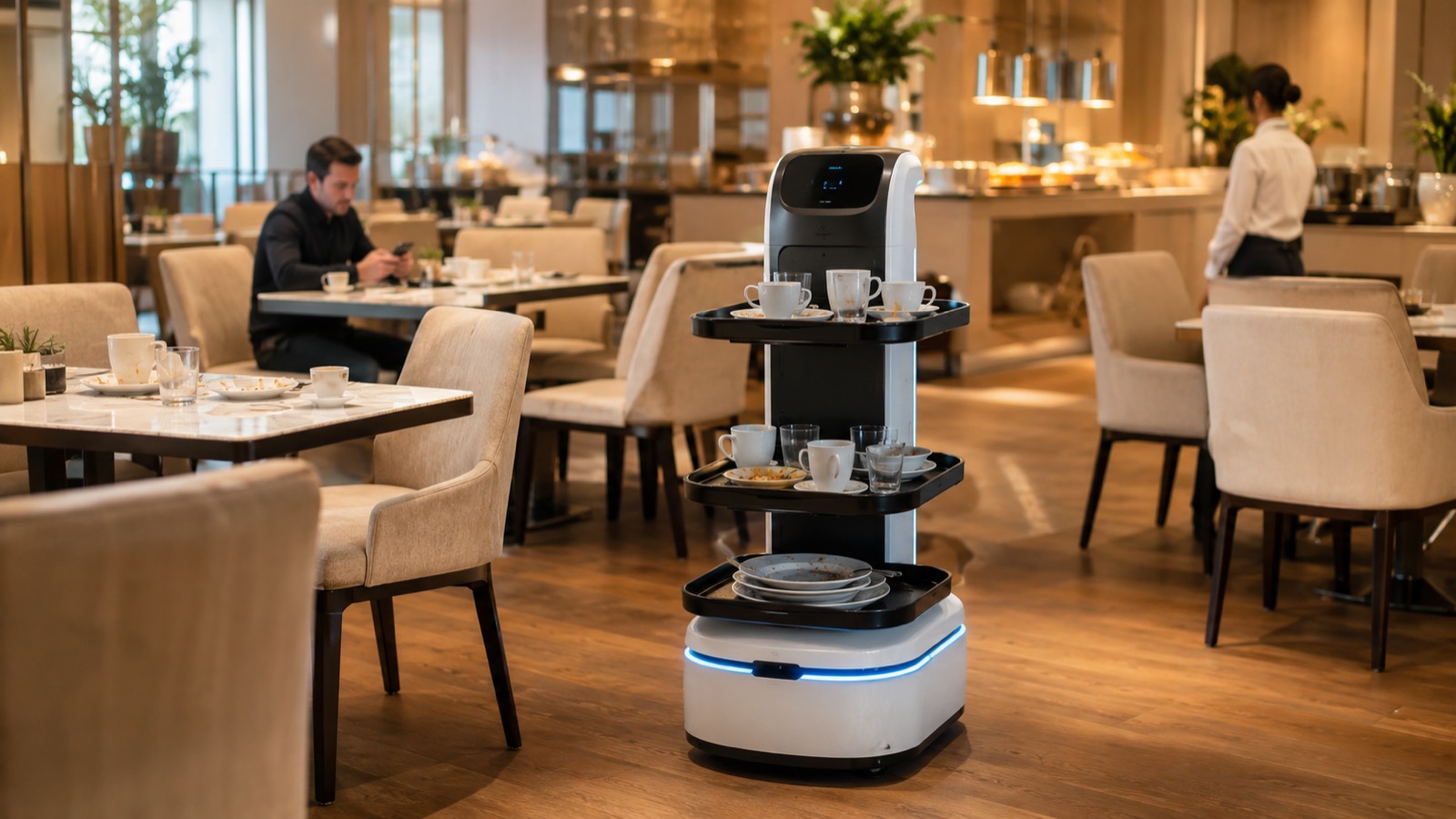
Where Is AI in Hospitality Already a Reality?
The greatest practical value of AI today doesn't lie in robotic front desks. It lies in simple, repetitive tasks.
Every day, guests ask questions like:
- What's the Wi-Fi password?
- Where can we park?
- What time is breakfast served?
- How does the air conditioning work?
- What time is check-out?
- Is there somewhere we can store our bikes?
- Where's the nearest restaurant that's open?
- Where can we go with kids when it's raining?
There's nothing wrong with these questions. The guest is in an unfamiliar environment and wants a quick answer.
The problem is that the same questions keep coming up over and over again.
A single answer takes just a few minutes. But if the front desk or owner deals with similar questions every day, they add up to hours of work.
This is exactly where AI can help today.
It can provide the guest with the right information, translate it into their language, and phrase it according to their specific question. The front desk can then focus on situations that truly require human attention.
AI Doesn't Need to Be Visible to Be Useful
Guests don't want to "use artificial intelligence."
They want to connect to the Wi-Fi, find the car park, or figure out where to get a good meal.
Similarly, the operator doesn't want to implement a language model. They want fewer repetitive questions, fewer phone calls, and happier guests.
Well-designed AI doesn't feel like a tech showcase. It works naturally in the background.
For example, a guest can scan a QR code in their room, open the digital concierge, and type:
"We're arriving back after midnight. Can we still get in?"
Instead of searching for the right paragraph in a long email, they get a direct answer based on the specific property's rules.
That's less flashy than a humanoid robot in the lobby. But for both guests and operators, it's far more useful.
What Tasks Does AI Handle Well?
AI works best where there's a clearly defined problem and a reliable source of information.
Answering Frequently Asked Questions
AI can explain accommodation rules, breakfast times, parking options, how to use equipment, or departure instructions to guests.
Communication in Multiple Languages
Foreign guests don't have to decipher information in English or use an external translator. They ask their question in their own language and receive an answer in the same language.
Local Recommendations
A digital concierge can recommend a restaurant, trip, pharmacy, or child-friendly activity. However, the quality of recommendations depends on whether the information is regularly reviewed and matches the character of the property.
Navigating Information
Guests don't have to browse through multiple emails, a website, and a paper folder in their room. AI helps them find a specific answer across all available information.
Handing Off Complex Requests to a Human
A good AI solution shouldn't continue a conversation at all costs. It needs to recognize when it's uncertain or when a situation requires an employee's decision.
Reliable AI isn't the one that answers everything. Reliable AI knows when not to answer.
What Can't AI Handle Reliably Yet?
AI isn't suitable for fully autonomous resolution of every non-standard situation.
Caution is especially needed with:
- complaints and conflict situations
- financial compensation
- reservation changes that affect pricing
- security incidents
- health or emergency situations
- individual exceptions to rules
- tasks requiring access to multiple different systems
- communication where empathy and personal judgment are essential
AI can gather information, explain next steps, or alert staff. But the final decision in these cases should be made by a human.
AI Quality Depends on Information Quality
AI doesn't inherently know how a specific hotel, guesthouse, or apartment operates.
It doesn't know where guests park, whether it's possible to arrive after midnight, or what time breakfast is served on weekends. This information must come from the operator.
If the input data is correct and up to date, the answer can be highly accurate. If the information is outdated, AI simply delivers a wrong answer faster.
Implementing AI therefore doesn't start with choosing a chatbot.
It starts with the property:
- gathering important information in one place
- removing contradictions and outdated instructions
- defining which questions AI can answer
- setting up situations that should be handed off to a human
- regularly updating the content
Without this foundation, you just end up with a fancier version of a confusing information brochure.
Will AI Replace the Hotel Front Desk?
Not in the foreseeable future. But it will change how the front desk spends its time.
Hospitality is built on trust, personal touch, and the ability to respond to unexpected situations. Guests probably won't remember what software the hotel used. But they will remember whether they felt welcome and whether someone helped them when a problem arose.
Automating routine tasks therefore doesn't have to weaken human contact. It can actually free up staff for situations where the human touch matters most.
Oracle describes automating routine tasks in hospitality as a way to boost employee productivity and allow them to focus more on guest care rather than repetitive work.
AI can thus function as a filter:
- it resolves common informational queries instantly
- it hands off non-standard or sensitive situations to a human
The receptionist doesn't have to explain the Wi-Fi password for the tenth time. They can focus on the guest who genuinely needs their help.
Is AI Worth It for a Smaller Guesthouse or Apartment?
Yes, but only when it solves a specific problem.
Small accommodations usually don't need a complex system connected to ten different apps. What they often need most is:
- fewer repetitive phone calls
- information accessible outside regular working hours
- communication with international guests
- clear self-check-in instructions
- trusted local recommendations for guests
Smaller operators can actually benefit significantly from simple automation. They often don't have a 24-hour front desk and handle guest inquiries personally alongside other operational duties.
The important thing is not to start with the question:
"How can we use AI in our accommodation?"
A better question is:
"Which repetitive situations take the most of our time, and could technology handle them more safely or quickly?"
How to Tell Useful AI From Technological Hype
When choosing a tool, the number of features or the amount of tech jargon in the presentation isn't what matters most.
More practical questions matter more:
- Does the tool solve a specific guest problem?
- Does it save staff measurable time?
- Does it work with the specific property's information?
- Can the information be easily updated?
- Can it acknowledge uncertainty?
- Can it hand off a request to a human?
- Does it work without downloading another app?
- Is it easy to use even for less tech-savvy guests?
- Is it clear how the system handles personal data?
If there are no concrete answers to these questions, you're probably not buying a problem solution. You're buying a technology story.
How Genius Loci Approaches AI
Genius Loci is an AI-powered digital concierge for hotels, guesthouses, and apartments that gives guests access to stay information, answers to common questions, and local recommendations via QR code.
We don't see AI as a replacement for the front desk or the host.
We see it as a practical layer between the guest and information the property already has but guests often can't find at the right moment.
At Genius Loci, we focus primarily on areas that come up repeatedly in accommodation communication:
- arrival and check-in
- parking
- Wi-Fi
- breakfast
- room amenities
- house rules
- check-out
- restaurant and activity recommendations in the area
Guests don't have to adapt to the structure of a hotel manual. They ask a question in natural language and get an answer in their own language.
The operator doesn't need to build their own chatbot or set up complicated automations. At the same time, they remain in control of what information the system uses.
The goal isn't to create a hotel without people.
The goal is to create a hotel where people don't waste time on work that technology can handle safely and reliably.
AI in Hospitality: Hype or Reality?
AI in hospitality is a reality. It just doesn't usually look like what futuristic videos show.
It's not an army of humanoid robots roaming hotel corridors.
It's a guest who at 10:30 PM finds the nearest open pharmacy without having to call the owner.
It's a foreign visitor who receives instructions in their own language.
It's a receptionist who doesn't have to answer the same questions every day.
And it's a guesthouse owner who can provide guests with useful information even while they're doing something else.
The future of hospitality won't be purely human or purely automated. It will combine human care with technology that quietly removes unnecessary work.
And that's exactly where AI stops being hype and starts being genuinely useful.
Frequently Asked Questions About AI in Hospitality
How is AI used in hospitality?
AI is used in hospitality for guest communication, translations, service recommendations, feedback analysis, pricing, offer personalization, and automating repetitive operational tasks.
Can AI replace the hotel front desk?
Not completely. AI can handle common informational queries and routine requests. Non-standard situations, complaints, conflicts, or sensitive decisions still require a human.
How can AI help a small guesthouse?
AI can help a small guesthouse answer frequent questions, provide self-check-in instructions, communicate in multiple languages, and recommend trusted local places to guests.
What are the main risks of AI in hospitality?
The main risks include inaccurate responses, using outdated information, improper handling of personal data, and automating situations that should be handled by a human.
What does a hotel need before implementing AI?
A hotel primarily needs up-to-date, structured information, clearly defined use cases, rules for escalating complex situations to staff, and a simple way to regularly update content.
Does a guest need to install an app for AI?
No. A practical solution can work directly in the web browser, for example after scanning a QR code in the room.