
How to Write a Knowledge Base for an AI Guide: A Checklist for Hosts
A practical checklist for accommodation hosts — how to write a knowledge base for an AI guide, what to include, how to structure it, and mistakes to avoid.

An AI guide is only as good as the information you put into it. The technology can answer in 100+ languages, 24 hours a day — but if the knowledge base is missing the Wi-Fi password or parking instructions, the guest won't get an answer.
The good news: you don't have to write it from scratch. Most hosts already have the information — in a PDF, in their head, in the answers they type to guests on Booking or WhatsApp every day. You just need to collect it in one place and give it structure.
This article is a practical checklist: what belongs in a knowledge base, how to write it, and what mistakes to avoid.
What Is an AI Guide's Knowledge Base?
A knowledge base is the set of information your AI guide draws answers from. When a guest asks "where can I park?", the guide looks here — not on the internet, not in generic ChatGPT.
That's the key difference from a general chatbot: the guide answers from your data. If it doesn't have the information, it says it doesn't know — and refers the guest to reception.
The better your knowledge base, the more accurate and useful the answers. And the less guests need you for routine questions.
Before You Start Writing: Where to Find the Information
You don't need to sit down and invent content. Look at what you already have:
- The PDF guide you email before arrival
- Guest messages on Booking.com, Airbnb, or WhatsApp — answers to repetitive questions
- The paper manual in the room
- Your accommodation website — FAQ section, room descriptions, area info
- Your own notes — what you tell guests when handing over keys
Review the last 20–30 messages from guests. What repeats? That goes into the knowledge base first.
Checklist: What Your Knowledge Base Must Include
1. Arrival and access
- Address with precise description (floor, entrance, landmarks)
- How to get there by car / public transport / on foot from the station
- Where and how to park (including price, if paid)
- Access code / door opening procedure
- Check-in time (and what to do for late arrivals)
2. Wi-Fi and essential amenities
- Wi-Fi password (and network name)
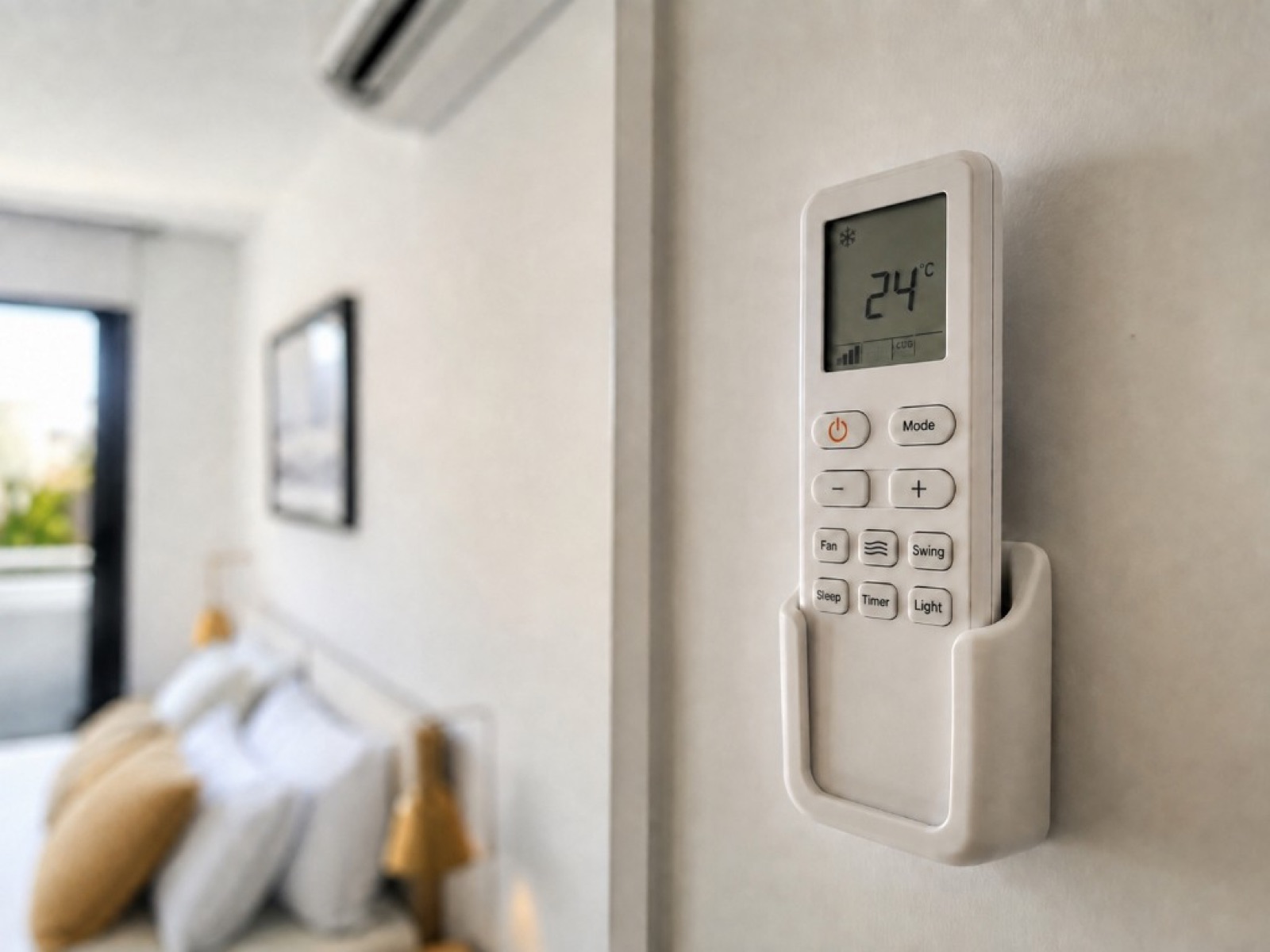
- How the air conditioning / heating / thermostat works
- How the washing machine, dryer, dishwasher work (if available)
- Where to find towels, bed linen, iron
- How the TV / streaming / speaker works
3. House rules
- Check-out time and what to do before leaving
- Quiet hours (from–to)
- Smoking (where yes, where no)
- Pets (conditions, fees)
- Maximum number of guests
- Where and how to sort rubbish
4. Food and drink
- Breakfast — time, location, what's included
- Dining options nearby (3–5 restaurants with cuisine type)
- Nearest shop / supermarket (distance, opening hours)
- Kitchenette — what's provided, what to bring
5. Surroundings and activities
- Things to do nearby (3–5 tips)
- Where to walk, hike, swim
- Where to go with kids
- Where to rent bikes, scooters, skis
- Nearest pharmacy, hospital, ATM
6. Contacts and emergencies
- Who to contact in case of a problem (number, WhatsApp)
- What to do during a power, water, or internet outage
- Emergency numbers (police, fire, ambulance)
- Where the fuse box / main water valve is
7. Departure and check-out
- Checkout time
- What to do before leaving (guest checklist)
- Where to return keys / how to close the smart lock
- Where to leave rubbish
- How to request late check-out (if available)
How to Structure the Knowledge Base
An AI guide doesn't use content like a PDF — it doesn't flip pages. But how clearly and unambiguously you write matters.
Rules for good structure:
- One topic = one paragraph. Don't mix parking and breakfast in the same block.
- Direct answers. Not "parking information is available at reception" — but "free parking in the courtyard behind the building, entrance from Květná Street."
- Specific numbers. Not "breakfast is in the morning" — but "breakfast 7:00–10:00 in the ground-floor restaurant."
- Current data. Opening hours change. Verify them when writing and update every season.
- Guest-friendly language. Write in your native language (Czech, English, etc.) — the AI will translate. But be unambiguous: avoid double meanings and local slang.
How Detailed Should the Knowledge Base Be?
The rule: if a guest might ask about it, it should be there. You don't need essays — short, clear answers are enough.
Example — air conditioning:
The air conditioner is controlled by a remote on the wall by the door. For cooling, set the mode to "Cool" and choose your desired temperature. The remote uses AA batteries — if it doesn't respond, replace the batteries in the back panel. Please turn off the AC when you leave the room.
Three sentences. But they answer 90% of AC-related questions: where is it, how do I turn it on, what if it doesn't work, and what should I do when leaving.
What to Avoid
- Vague statements. "Reception will provide information" — the guest already knows that. They want a specific answer.
- Outdated information. Restaurant closed? Opening hours changed? A knowledge base with false data is worse than no knowledge base at all.
- Copying your entire website. An AI guide doesn't need your history, room pricing, or booking conditions. It needs operational information for guests who are already there.
- Overly formal language. Write the way you'd say it to a guest in person.
- Missing instructions for equipment. Guests don't know how to operate your AC, washing machine, or induction hob. A brief guide saves hours at reception.
How Long Does It Take to Write?
Realistic estimate:
| Property size | Time for first version |
|---|---|
| 1 apartment | 1–2 hours |
| Guesthouse (5–10 rooms) | 2–4 hours |
| Small hotel (10–30 rooms) | 3–6 hours |
Most time goes not into writing but into gathering information from various places (website, PDF, the owner's head). The actual writing is quick — short, specific answers.
After the first version, updates are easy: a changed opening time = 2 minutes.
Example: Knowledge Base for an Apartment
For inspiration — a basic setup for an apartment with self check-in:
ARRIVAL
Address: Vinohradská 12, Prague 2, 3rd floor, apt. 7
Building entrance code: [your code]
Apartment door code: [your code]
Check-in: from 15:00

PARKING
Street parking available (blue zone, 40 CZK/hour, free 18:00–08:00).
Nearest garage: Parking Vinohrady, Slezská 56 (250 CZK/day).

WI-FI
Network: ApartVinohrady_Guest
Password: Prague2024!

AIR CONDITIONING
Remote on the wall by the door. Use "Cool" mode for cooling.
Please turn off when you leave.

CHECK-OUT
By 10:00. Close windows, turn off AC, take rubbish to the bins in the courtyard. Just pull the door shut.
This is a starting point — a 5-minute read that covers 80% of questions. Then you add surroundings, restaurants, and activity tips.
How This Connects to Other Tools
A knowledge base is the foundation. But it works best in combination:
- QR code in the room — leads guests to the guide at the right moment
- Digital guest guide — the format guests consume information in
- Pre-arrival message — tells the guest the guide exists
The knowledge base itself is just text. The value comes from an AI guide for hotels, guesthouses, or apartments that answers from it in 100+ languages — instantly, 24/7.
Frequently Asked Questions About AI Guide Knowledge Bases
Do I have to write the knowledge base in English?
No. Write in whatever language is natural to you. The AI guide automatically translates answers into the guest's language. What matters is clarity and being unambiguous, not the language itself.
How often should I update the knowledge base?
We recommend checking at the start of each season + whenever something changes (new restaurant hours, Wi-Fi password change, nearby construction). A change takes minutes, not hours.
What if I don't have time to write a knowledge base from scratch?
Most hosts don't write from scratch — they convert an existing PDF, website FAQ, or their repeated guest messages. When you sign up for Genius Loci, onboarding helps with the initial setup.
Can a knowledge base be too long?
Length itself isn't a problem — the AI guide finds the relevant part. But unnecessary information (building history, booking policies) slows down maintenance and adds no value for guests on site.
What if the AI answers something that isn't in the knowledge base?
A properly configured guide only answers from your data. If it can't find the answer, it says "I don't know" and refers to a contact. It never makes things up — that's the difference from generic ChatGPT.
Sources and Further Reading
- Digital Guest Guide: What It Is and What It Should Include — what belongs in a guide overall
- 5 Most Common Guest Questions — what guests actually ask (and what must be in your base)
- How Much Does an AI Hotel Guide Cost — pricing context for the whole solution
- How a QR Code Saves Hours at Reception — how to get guests to the guide
- AI guide for apartments — landing page for apartment managers
- Oracle Hospitality + Skift: Hospitality in 2025 — 73% of guests want mobile self-service